Main Seychelles Islands
Country: Seychelles 🇸🇨
País: Seychelles 🇸🇨
Страна: Сейшелы 🇸🇨
Overview
A simple, high-value route through the main inhabited islands of the Seychelles.
Mahé is the main gateway and the most varied island, with hikes, viewpoints, and a wide range of beaches. Cerf Island works as an optional quiet side-stay very close to Mahé. Praslin adds Vallée de Mai, top beaches, and Curieuse day trips. La Digue is the most distinctive stop for bicycle transport, granite beaches, and a slower island rhythm.
Region: Inner Seychelles islands
Overall time: 7–14+ days
Main focus: beaches, snorkeling, light hiking, island-hopping
Best season: April–May and October–November for calmer sea conditions; May–September is drier but windier

Mahé Island ▾
Mahé is the most varied island in the itinerary: mountains, viewpoints, and a long list of beaches.
It works both as a full base on its own and as the main gateway to the other islands.
Why visit:
• Best combination of beaches, hikes, viewpoints, and infrastructure
• Good island to stay longer because there is a lot to do
• Main transport hub for ferries, flights, buses, and arrival logistics
Recommended stay: 3–6 days
Where to base:
• Beau Vallon – best all-round practical base: good swimming beach, the widest accommodation choice, restaurants, and easy day-to-day logistics; a little more crowded than other parts of Mahé
• Anse Royale – calmer southeast base with a good swimming beach, minimal infrastructure, and useful bus connections toward the south beaches
Beaches:
• Snorkel-friendly on calmer days:
- Port Launay – lagoon feel, one of the best snorkeling beaches on Mahé
- Anse Soleil – small bay, often clear water, one of the best beach stops on the island
These are important beach stops, but they are harder to reach by bus than Beau Vallon or Anse Royale.
• Swim + infrastructure:
- Beau Vallon
- Anse Royale
• Wild south beaches, mainly for scenery:
- Anse Intendance
- Petite Anse
- Police Bay
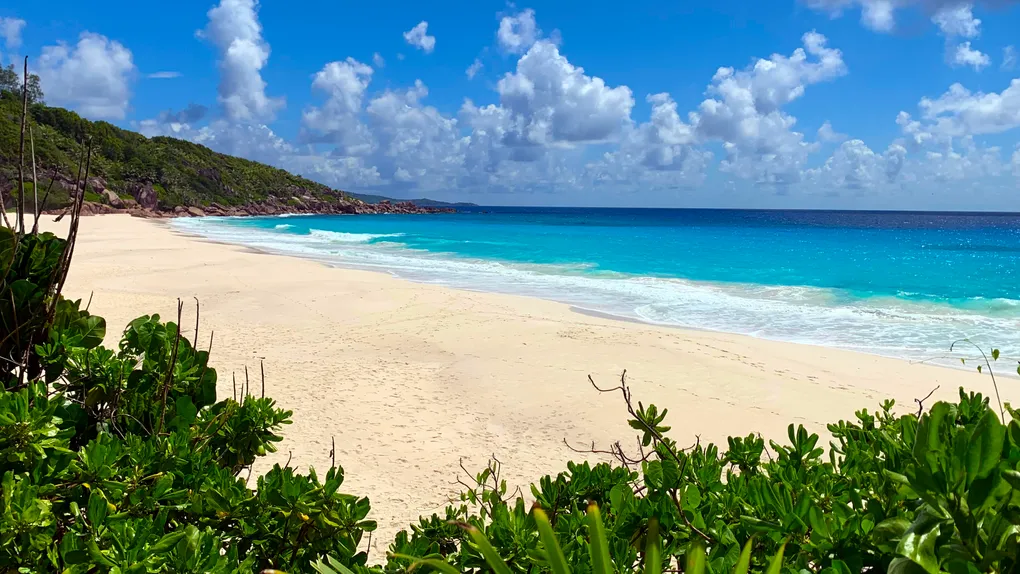
These beaches are more remote, usually have very few people, and often have stronger waves. They are better for photos and coastal scenery than for easy swimming.
Short hikes with big payoff:
• Copolia Trail – classic viewpoint over the north of Mahé and toward Eden Island
• Morne Blanc Trail – viewpoint over the larger south beaches and a different part of the island
Victoria:
• Short market and central walk
• Main hub for buses and ferries
Getting around by bus:
• Buses run from Victoria terminal; route numbers are displayed on the bus
• Beau Vallon corridor commonly uses routes 20/21/22/24/24A
• Bus 14 can be used for hikes access (also very scenic ride)
• Busses 2, 5, 6 link the Anse Royal and the south beaches
Taxi:
• Mostly for arrival and departure
• Expensive, but often the only practical option for airport or ferry transfers
• Not very useful for everyday sightseeing: expensive, and harder to find in remote areas
Car rental:
• A rental car adds flexibility especially for beaches with harder access, such as Anse Soleil
• It requires more planning, but gives more freedom than buses
• At the same time, Mahé can still be explored fully by bus
Cerf Island ▾
Cerf is a small island inside the Sainte Anne Marine Park zone, very close to Mahé.
Why visit:
• Much quieter than Mahé
• Good snorkeling directly from shore
• Easy kayak exploration around the coastline
• Small empty beaches and nearby islets give it a different feel from the larger islands
Usually it is treated as a day trip from Mahé for snorkeling.
But you can also stay there for 1–3 days and explore it during sunset and in the morning, when it feels more private and less visited.
Recommended stay: 1–3 days
What makes it different:
• You can take a kayak and move around the island at your own pace
• It feels more isolated than Mahé, with no cars, buses, or busier beach zones such as Beau Vallon or Port Launay
• It works well as a short upgrade if you want a more secluded island feel without going far from Mahé
How to get there:
• Hotel-arranged boat transfer from Mahé
• Usually only about 10 minutes from Eden Island terminal
Cost note:
• Cerf is much more expensive than staying on Mahé
Praslin Island ▾
Praslin is compact and easy to structure into two main days plus beach time.
Why visit:
• Vallée de Mai is one of the most distinctive natural sites in the Seychelles
• Good mix of inland nature and top beaches
• Best base for Curieuse day trips
Recommended stay: 2–4 days
Core inland highlight:
• Vallée de Mai – UNESCO site with the unique Coco de Mer palms
Top beaches:
• Anse Lazio – classic postcard beach
• Anse Georgette – often access-controlled through the resort, usually requires reservation
• Côte d’Or / Anse Volbert – long beach, easy swimming, practical area to stay
Day trip:
• Curieuse Island – giant tortoises and a coastal walk; the standard add-on from Praslin
Getting around by bus:
• Praslin has three main bus routes: 61 / 62 / 63
• Buses work well for basic movement between beaches and settlements
• Taxis are mostly for arrival, departure, or less convenient beach access
How to arrive:
• Ferry from Mahé is the standard option
• Domestic flight from Mahé is the fastest option and can be useful in rough sea season
La Digue Island ▾
La Digue is the most distinctive island in the route: bicycles, short distances, giant tortoises, and the most iconic granite beach scenery in the Seychelles.
Why visit:
• The most characteristic Seychelles beach landscapes
• Bicycle transport changes the rhythm of the stay completely
• Easy short rides between beaches and viewpoints
• Giant tortoises can be seen both at key sites and wandering around the island
Recommended stay: 2–4 days
Getting around:
• Bicycle is the default form of transport
• Rent near the jetty or through accommodation
• Limited vehicle traffic is one of the reasons the island feels so different
Core highlights:
• Anse Source d’Argent – iconic beach with granite boulders
• L’Union Estate – access point for Anse Source d’Argent and also home to giant tortoises
• Grand Anse, Petite Anse, and Anse Cocos – better for scenery and short hikes than for calm swimming
• Anse Severe – practical north-side beach and one of the best sunset options
• East-side beaches – very quiet and strongly tide-dependent
Practical note:
• Many travelers do La Digue as a day trip
• It works, but 2–4 nights allows you to visit the main places without rush and enjoy the island more fully
How to get there:
• Ferry from Praslin is the most common option
• Ferry connections to Mahé also exist, often via Praslin, and can be used to finish the itinerary directly from La Digue
Transportation
Buses:
- SPTC is the public bus operator on Mahé and Praslin
Ferries:
- Cat Cocos is the main high-speed ferry network (Mahé–Praslin–La Digue)
- Cat Rose focuses on Praslin–La Digue hops
- La Digue → Mahé ferry connections also exist and can work well for the end of the trip
Flights:
- Air Seychelles runs domestic Mahé–Praslin flights
Local transport:
- Mahé and Praslin can be explored by bus
- Taxis are mainly useful for arrival and departure
- La Digue is best explored by bicycle
Useful links
Public buses (SPTC):
- Timetables download hub: https://sptc.sc/timetable/
Ferries:
- Cat Cocos booking: https://booking.catcocos.com/
- Cat Rose booking: https://www.iif-catrose.com/booking
Domestic flights:
- Air Seychelles domestic services: https://www.airseychelles.com/en/domestic-services
Nature and parks:
- Vallée de Mai official site: https://www.sif.sc/vdm
La Digue:
- L’Union Estate: https://www.lunionestate.com/
Best season
April–May and October–November are usually the most balanced months for this route, with calmer seas and easier inter-island conditions. May–September is generally drier and often good for hiking, but trade winds can make some crossings and exposed beaches rougher. December–March is warmer and more humid, with a higher chance of rain.