Northern Vietnam
Country: Vietnam 🇻🇳
País: Vietnam 🇻🇳
Страна: Вьетнам 🇻🇳
Video VideoВидео
Overview
This part of the country is best suited to landscapes, historic cities, and slower overland travel rather than beach-focused trips. Compared with central and southern Vietnam, the weather is more seasonal, especially in the mountains.
Region: Northern Vietnam
Overall time: 8–14 days
Main focus: mountains, karst landscapes, culture, historic cities
Best season: March–May and September–November; winter is colder, while summer is rainier

Hanoi – Old Quarter, Museums & Main Transport Hub ▾
Hanoi is the natural starting point for Northern Vietnam and the region's main cultural and transport base.
Why visit:
• Historic core with a dense concentration of sights
• Best city base for northern connections
• Strong mix of architecture, museums, temples, and daily street life
Base:
• Old Quarter or Hoan Kiem area for first-time visits
• Ba Dinh area if you want a quieter stay near major monuments
Places to visit:
• Old Quarter – best for walking, cafés, and street atmosphere
• Hoan Kiem Lake – central city landmark
• Temple of Literature – one of the main historical sites
• Ho Chi Minh Mausoleum area – key political and historical complex
• Museums and pagodas across the central districts
How long:
• 2–4 days for the city itself
• More if using Hanoi as the main base for side trips
What to know:
• Hanoi works well at both the start and end of the route
• Many northern connections are easiest from here by train, bus, or flight
Ninh Binh – Karst Landscapes, Boat Rides & Temples ▾
Ninh Binh is the easiest landscape extension from Hanoi and one of the most rewarding short stops in northern Vietnam.
Why visit:
• Limestone scenery, rivers, and rice fields
• Easy cycling and short viewpoint hikes
• Good contrast with Hanoi without requiring a long transfer
Base:
• Tam Coc or Trang An area for the best access to the main sights
• Ninh Binh city is more practical but less atmospheric
Places to visit:
• Trang An – the main boat trip area
• Tam Coc – another classic karst landscape stop
• Bai Dinh Pagoda – large temple complex
• Viewpoints around the karst hills and countryside roads
How long:
• 1–2 nights works well
• Possible as a long day trip from Hanoi, but better with an overnight stay
How to get there:
• Train or bus from Hanoi
• Short taxi transfer is usually needed from the station to the main sightseeing areas
Sapa – Mountain Views, Terraces & Highland Climate ▾
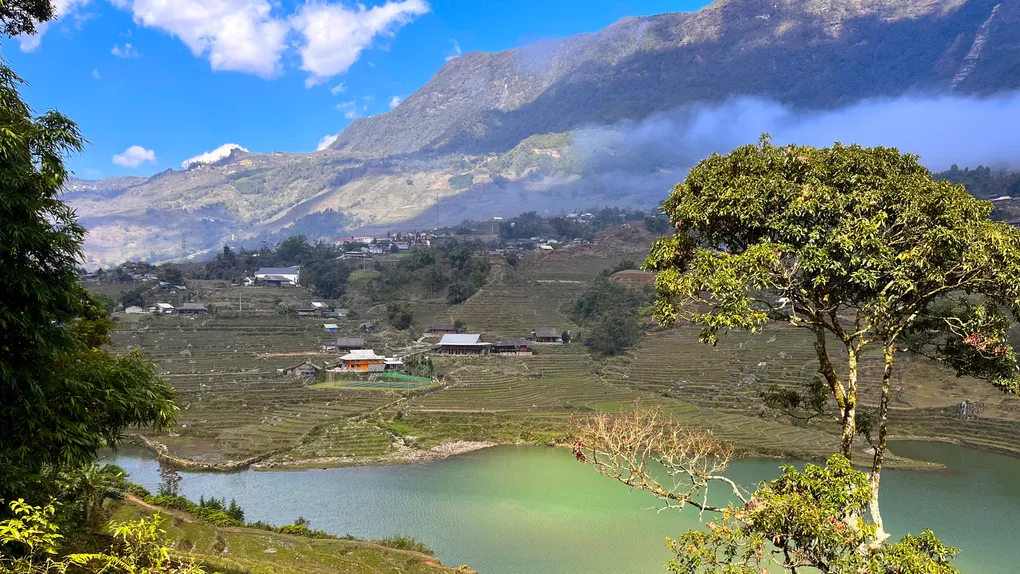
Sapa is the main mountain stop in this itinerary and the best choice for terraces, valleys, and cooler weather.
Why visit:
• Mountain scenery very different from the rest of Vietnam
• Rice terraces and highland villages
• Cooler climate than Hanoi and the coast
Base:
• Sapa town for the whole stay
Places to visit:
• Fansipan – cable car access to the highest peak in Indochina
• Terraced valleys around Sapa
• Village walks and local viewpoints
• Markets and short excursions in the surrounding highlands
How long:
• 2–3 days is usually enough
• Longer if you want several trekking days
How to get there:
• Overnight train from Hanoi to Lao Cai plus onward transfer
• Direct sleeper buses are also common
What to know:
• Sapa is most reliable in spring and autumn
• Winter can be cold and foggy
• Summer is greener but wetter, with a higher chance of muddy trails
Halong Bay – Cruise Landscape & Water Scenery ▾
Halong Bay is the main water-based extension from Hanoi and is usually best visited as a cruise rather than a simple transfer destination.
Why visit:
• One of Vietnam's best-known natural landscapes
• Limestone islands and sheltered bays
• Good change of pace after cities and mountain travel
Base:
• Usually not a fixed hotel base, but a day cruise or overnight cruise
• Overnight cruise is the more relaxed option
Places to visit:
• Main bay cruising routes
• Limestone islands and caves
• Viewpoints and kayaking stops depending on the cruise itinerary
How long:
• 1–2 days
• Overnight cruise is usually better than a rushed day trip
How to get there:
• Shuttle bus, private transfer, or tour transfer from Hanoi
What to know:
• The exact experience depends heavily on the cruise route and operator
• Weather and visibility matter more here than in Hanoi
Transportation
- Hanoi is the main hub for the whole route
- Hanoi ↔ Ninh Binh works well by train or bus
- Hanoi ↔ Sapa is usually done by overnight train plus transfer, or by sleeper bus
- Hanoi ↔ Halong Bay is usually done by shuttle bus or organized transfer
- Within Hanoi and Ninh Binh, taxis and ride-hailing are often the most practical option for shorter transfers
Connections
- Hanoi → Danang or Hue (see Central Vietnam)
- Hanoi → Ho Chi Minh City (see Southern Vietnam)
Useful information
-
Vietnam Railways online booking:
https://dsvn.vn/ -
Trang An official ticket page:
https://muave.disantrangan.vn/home/en -
Ninh Binh official ticket price list:
https://dulichninhbinh.com.vn/en/printer/1801 -
Sun World Fansipan visitor information:
https://sunworld.vn/en/fansipan -
Ha Long Bay official entrance ticket information:
https://halongbay.com.vn/en/c/ve-tham-quan
Best season
March to May and September to November are usually the most reliable periods for this route.
Spring is good for Hanoi, Ninh Binh, and Sapa, while autumn is often one of the best periods for clearer mountain and bay conditions.
December to February can be cold and misty, especially in Sapa.
June to August is greener but hotter and rainier, with a higher chance of heavy showers in the mountains.